

How To Tell Real Damascus Steel
The knife earth is plagued with fakes and frauds.
People on eBay are trying to laissez passer off $400 Sebenzas as existent and sellers on Amazon are unknowingly selling fake CRKT and SOGs to unsuspecting customers.
Because of all the tricksterism plaguing the pocketknife community, I ofttimes get asked whether a pocketknife is real or fake. While I recently wrote a guide on how to spot a counterfeit knife, it didn't address another popular question — is my Damascus knife a imitation?
Damascus knives are becoming more popular and more prevalent from the most popular knife brands like Spyderco (with the Endura and others) to bottom known brands like BucknBear.
What makes people even more confused most the legitimacy of Damascus steel is the vast price differences. Could a $50 knife with Damascus steel be existent when yous see other Damascus blades topping the $500 marker?
Let's dig deeper.
What is Damascus?
Before determining whether your Damascus is fake or existent, we should showtime define what Damascus really is.
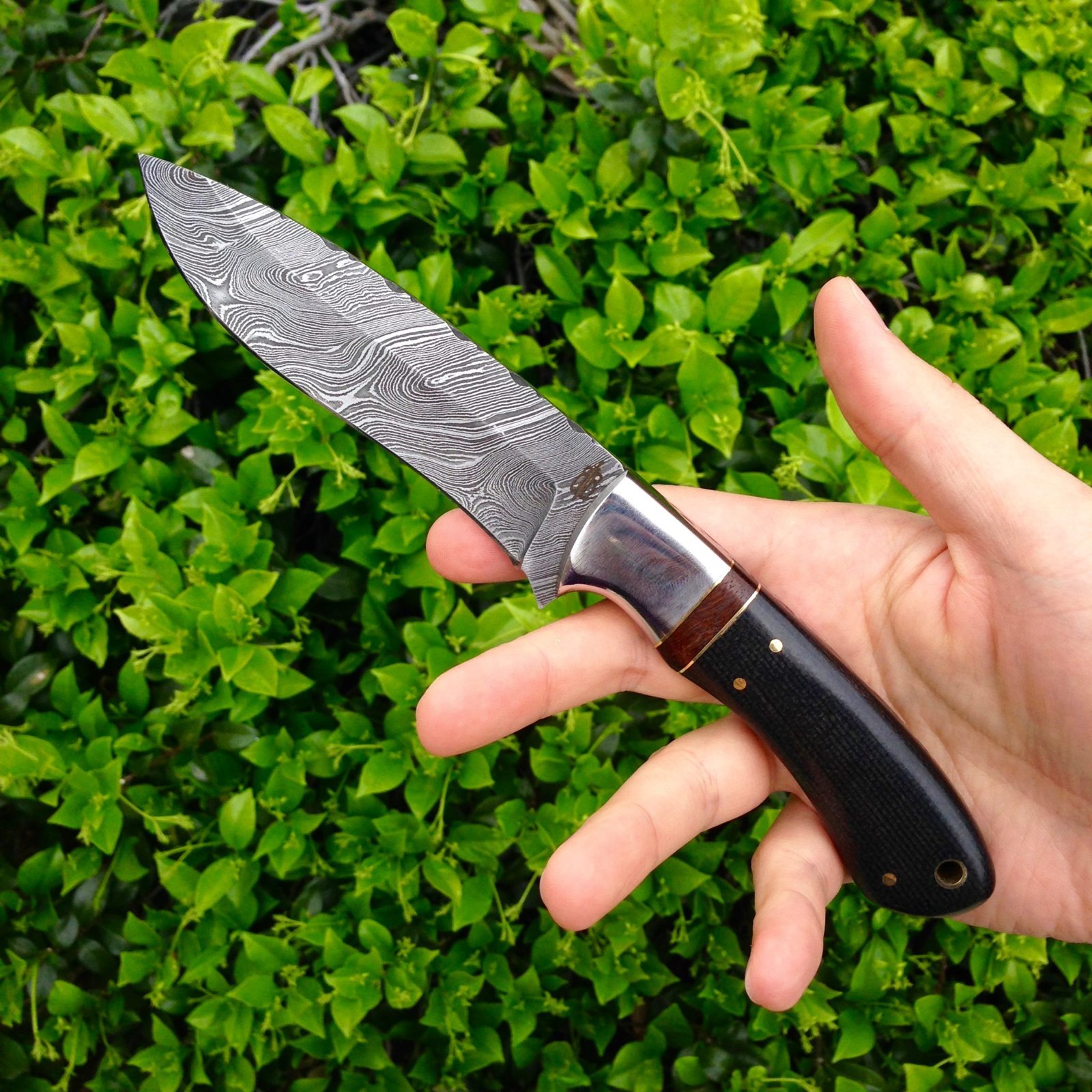
Damascus is that wavy blueprint in steel that looks exotic and downright gorgeous.
I'm simplifying this a ton, merely there are ii ways to go "real" Damascus steel: Wootz and design-welded steel.
Wootz steel
The offset real Damascus steel was introduced around the 3rd century and was known past Wootz (and other names). It was a crucible steel that was fabricated past melting pieces of iron and steel in clay pots.
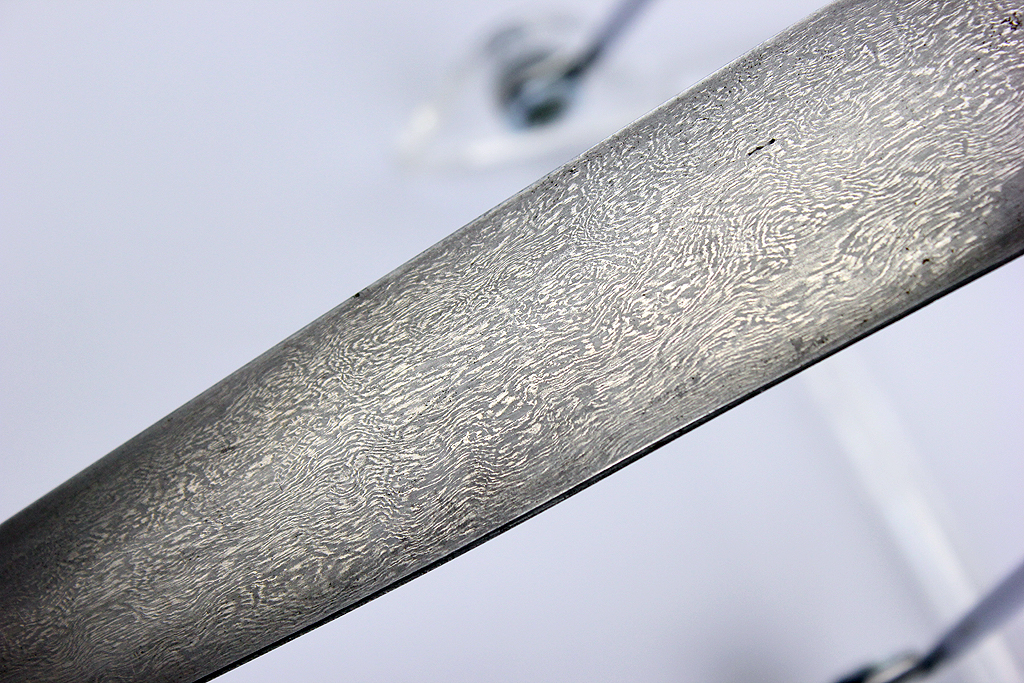
Here is an excellent layman'south explanation from The Association For Renaissance Martial Arts:
It'southward produced past melting pieces of iron and steel with charcoal in a reducing atmosphere (defective oxygen). During the procedure, the metals absorb carbon from the charcoal and the resulting alloy is cooled at a very tedious charge per unit. This produces a fabric with a visible crystalline structure of varying carbide contents. Forging the material into a desired shape (such every bit a sword blade) alters the crystalline construction into the familiar waving or watered pattern that Damascus steel is known for. This technique is extremely work intensive and requires a high caste of skill to keep the necessary temperatures abiding throughout the procedure.
This type of steel originated in Republic of india and was passed down past blacksmiths throughout the Due east. The steel was eventually introduced to Damascus, Syria. In that location are many theories why it is called Damascus, but nosotros won't go into it hither.
The true fashion to make Damascus this way was lost somewhere in the 17th century as those handed down the knowledge died out. People in modern times accept mimicked the process and likely accept come close to recreating the original Damascus.
Even so, the soil composition and chemical backdrop of the steel used in the specific region brand truly recreating that original Damascus likely impossible.
Pattern-welded steel
This is what people these days call Damascus. Information technology represents 99.9 percent of all the Damascus steel you see.
This process involves forging two or more types of steel that complement 1 another and folding the steels together. So, some acrid carving is done to amplify the differences in the steel. This creates a wavy design that closely resembles the Damascus of old.
Pattern-welded steel cruel out of fashion for centuries before existence brought back to modernistic times singlehandedly past the ingenious Beak Moran in the 1970s.
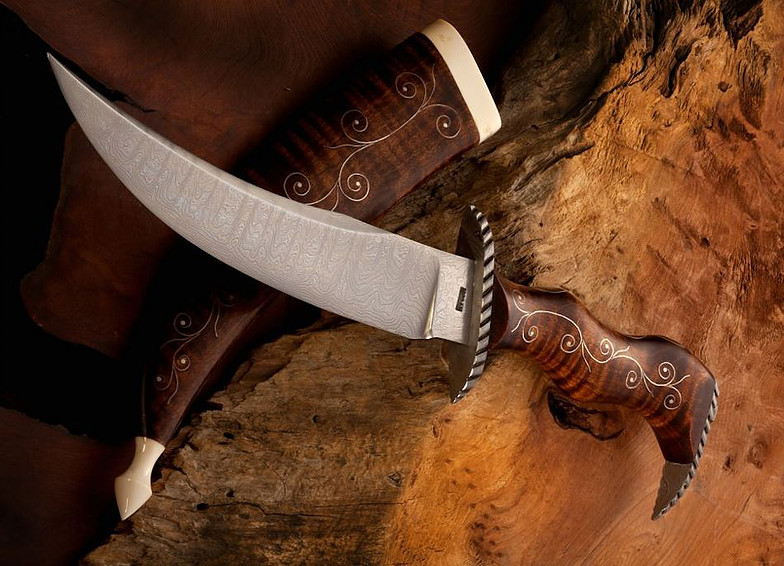
Here is an image of the Moran Fighter from The William F. Moran Jr Museum
Y'all volition also sometimes meet knives that say VG-x Damascus. In this process, there is a VG-10 cadre with Damascus steel on either side. The steel is laminated in the mold of San Mai, in which 3 layers of steel are sandwiched together.
If you can't wrap your head around what I'm talking about, watch this video from Walter Sorrells nigh the two types of "real" Damascus steel.
So, Is My Damascus Blade Real?
Some people still insist that any Damascus steel made through the pattern-welded method and etching is not real Damascus. Those people are just wrong.
If you have a Damascus blade that was made with pattern-welded steel and some acrid etching, and then yous practice indeed accept a real Damascus blade. Considering pretty much every unmarried knife on the marketplace that says it's Damascus is design-welded steel, it's not a large deal.

However, in some rare cases, people volition try to pass off regular stainless steel with no layering as Damascus by printing a design on the blade. These are pretty easy to spot considering they either don't look similar Damascus or the blueprint could just rub off.
Existent Damascus is intrinsic to the steel itself but fake Damascus is simply a facade.
For a quick look at a fake Damascus pocketknife, take a wait at this pocketknife presented by the keen Nick Shabazz and listen to how he determined its inauthenticity (starting at 10:01 and ending at 11:40) :
You can surprisingly add etching that looks similar to Damascus to any old stainless steel knife with some smash polish and ferric chloride.
But many people still have concerns almost the authenticity of their Damascus, so I'll answer some mutual questions people take nearly the steel.
Why Isn't the Damascus Visible Everywhere on the Bract?
A few years ago, I wrote a review of a BucknBear Damascus Hunting Pocketknife. The comments are filled with people claiming that the knife I reviewed is a imitation because yous can't see the design all over the blade.
Here's one comment:
The Damascus pattern but exists on the main sides of the knife. No pattern shows on the edges or the dorsum of tang, i.e., the area between two sides of the handle.
Truthful Damascus steel should be like those cakes that accept colorful layers. No matter where you cutting the cake, the surfaces show the pattern.
There is a reason the pattern is non clearly visible on certain parts of a blade. Either the pattern was polished out later carving or it simply wasn't acid etched. This video from BowieMaker shows how a Damascus blade does not await dissimilar than whatever other knife… until y'all dip it in acrid for fifty-fifty a few seconds.
Just the truth is, you can see the pattern in the steel, just very lightly. If there is a part of the blade that is non etched, yous should even so exist able to run across the blueprint, admitting lightly, in different light.
I can see the blueprint on the spine and file work of the BucknBear I accept. It'southward simply not very visible.
What is that Remainder Coming Off the Blade?
If you clean your Damascus blade you may notice some black residue coming off the blade. Yous may exist thinking to yourself that this must exist the print coming off. That'south probably not the case.
That is likely rest from the acid etching. That does not mean you have a simulated.
Why is There a Huge Price Difference for Damascus?
Oh, you got a Damascus steel binder for only $40? It must exist a faux.
Again, that'south not true.
Just like whatsoever other knife, Damascus varies in quality. Damascus handmade by custom knife makers with a intendance and attention to item will cost much more knives made in Islamic republic of pakistan.
For example, BucknBear has become known for making some great Damascus steel knives at relatively cheap prices. I reached out to them to confirm that their Damascus is 100 percent real and that their knives come up from Pakistan.
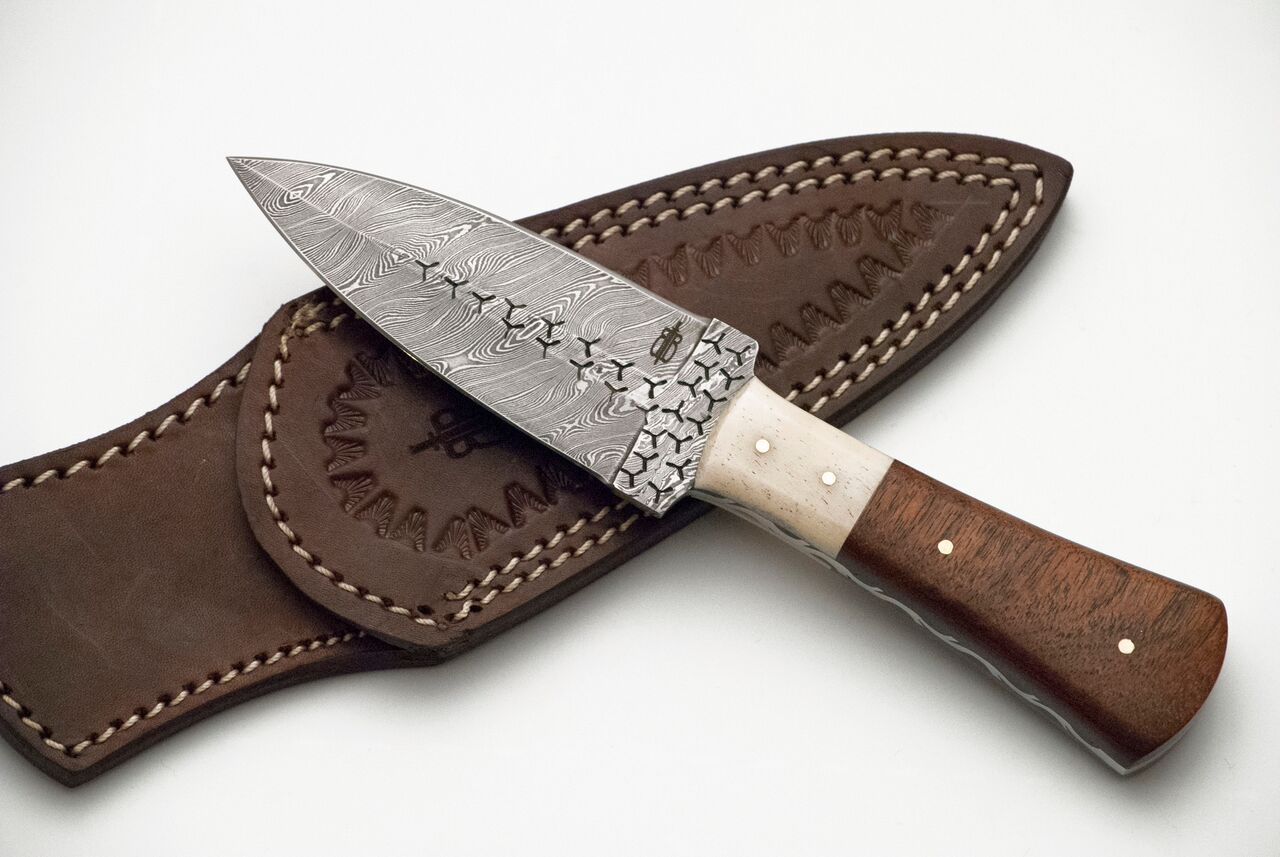
Pakistan is a region known for making inexpensive Damascus blades. Fifty-fifty though the art of Damascus steel originated from that region, you can get some pretty poor quality knives if you don't choose right. And but equally with anything at cheaper prices, mileage may vary.
Nevertheless, a low cost does non necessarily hateful a imitation. Don't purchase off eBay, simply if y'all practice, don't exist surprised to run into a Damascus fixed blade on there from Pakistan for a few bucks. Beware of quality control problems and worse.
Of course, discerning the quality from junk is hard, especially when places don't tell the steel used to make the Damascus.
Why Do Damascus Patterns Look So Different (or the Same)?
There are many types of patterns you lot tin achieve during the process of making pattern-welded steel. Many of these have different names and looks — sharktooth, basketweave, typhoon, dot matrix, and more more than. (Hither's a skillful look at some of the unlike patterns.)
You lot tin can accomplish these specific patterns past folding the steel and manipulating it in very specific means.
Probably the most popular design is the "random" pattern, which is why the Damascus may wait different from one knife to the other. Either manner, nearly Damascus has its own personality and await.
How Practise I Really Tell If I Accept a Imitation Damascus Knife?
If you lot're really adamant on knowing whether your Damascus is real or simulated, the just real way to tell is to completely polish the blueprint out of the blade. You can use sandpaper to get that satin look. In one case it's overnice and polished, compose it with ferric chloride or muriatic acid.
(I recommend reading actual knife makers for better communication and step-by-step instructions.)
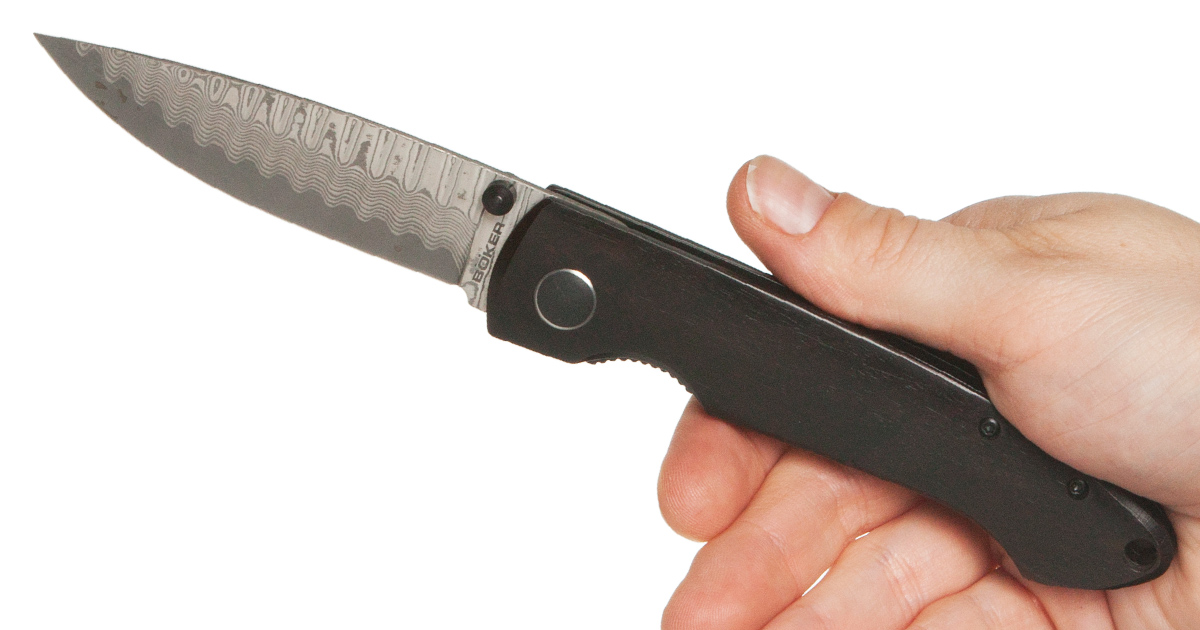
If the Damascus design comes back, it'southward existent. If not, you have a imitation on your hands.
Because Damascus tin be washed the real way pretty cheaply, finding a simulated Damascus is rarer than you might recollect. Still, it's e'er good to be informed and enlightened of what to look for.
Source: https://blog.knife-depot.com/how-to-tell-real-damascus/
0 Response to "How To Tell Real Damascus Steel"
Post a Comment